

QHSE Lifecycle: Manage Impacts from Start to Finish
Most QHSE plans stop at the worksite gate, yet hazards and environmental impacts are locked in long before and long after. This post shows how to map the QHSE lifecycle from design to disposal, assign owners and review every stage on a cycle. Includes a free downloadable Lifecycle Impact Register with automatic review status.

Concrete Pour SWMS: Pump, Boom, Vibrator, Cure
A concrete pour SWMS usually describes the concrete and ignores the equipment that injures people: the pump truck on soft ground, the boom near overhead powerlines and the blocked line that somebody opens under pressure. This post sets out the WHS Regulations that apply, the four control points the SWMS must name, and the free Concrete Pour and Placing Boom Pre-Pour Checklist that turns them into a gate.
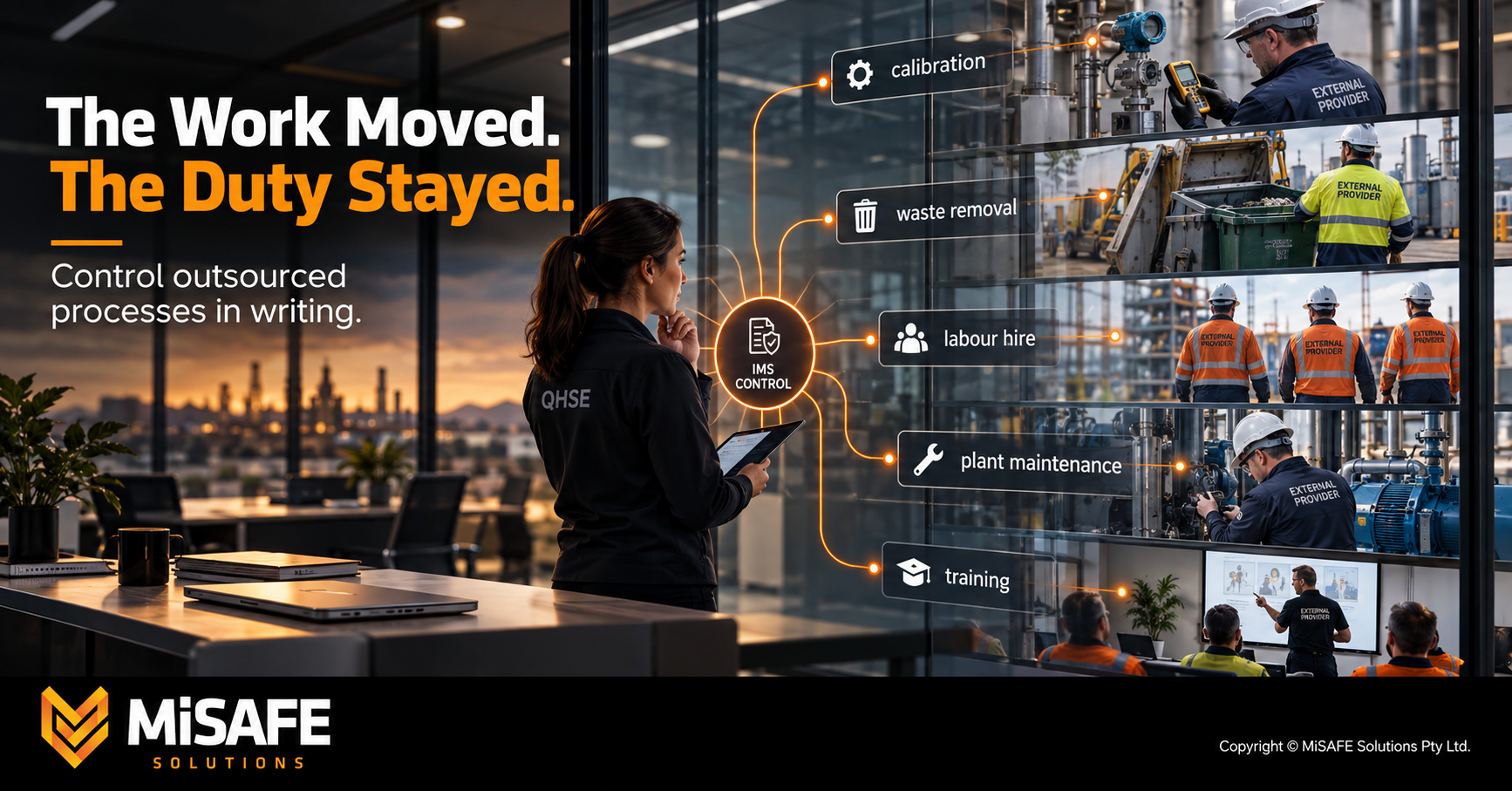
Oversee Outsourcing: Extending Your IMS to External Providers
Outsourcing a process does not outsource the duty behind it. This post shows how to keep outsourced processes inside your IMS: decide the type and extent of control, write the acceptance criteria into the contract, verify the evidence on a cycle, and keep the WHS, quality and environmental obligations you cannot hand away. Includes a free downloadable Outsourced Process Register.

Steel Erection SWMS: Bolt-Up, Welding and the Hook Release Decision
Most steel erection SWMS documents copy the crane document and the heights document, then stop before the moment that matters. This post covers the high risk construction work categories that apply, the erection sequence as a control, and the hook release rule that turns intent into evidence. The free Steel Erection Sequence and Hook Release Checklist is at the end.

Crane and Lifting SWMS: Lift Plans, Studies, Spotters
Most crane SWMS documents name the crane and the licence, then stop. Nobody has documented the lift study, the exclusion zone or the dogger’s authority to stop the lift. This post walks the lifting duties the WHS Regulations actually set, from the load chart to the stop-work call, and comes with a free lift plan and pre-lift checklist.

Tame Daily Risks: Controlling Hazards in Everyday Work
Most safety systems are built for the dramatic while the routine work quietly produces the injuries. This post shows how to control everyday workplace hazards properly: choosing a control high enough on the hierarchy, maintaining it under regulation 37, and verifying it on a cycle instead of hoping it held. Includes a free downloadable Hazard and Control Register.

Electrical Work SWMS: Live, De-Energised, Test Before Touch
Most electrical documents assert that the circuit is de-energised without naming who isolated it, who locked it and who tested it. This post walks the isolation chain the WHS Regulations require, from the de-energised default to the four narrow gates that allow live work, and it comes with a free isolation checklist.

Prep for Emergencies: QHSE Plans That Safeguard Lives
Most emergency plans are a laminated evacuation map and a fire extinguisher nobody has checked since the last tenant. This post shows how to build an emergency preparedness plan that meets WHS Regulation 43, ISO 45001 Clause 8.2, ISO 14001 Clause 8.2 and AS 3745, and how to prove it works before an emergency proves it does not. Includes a free downloadable Emergency Preparedness and Drill Register.

Engage Contractors: Managing External Partners for QHSE Harmony
Contractors do your highest-risk work, yet most businesses manage them with a folder of expired insurances and an unread SWMS. This post shows how to run contractors through a full lifecycle inside your IMS, from prequalification to performance review. Includes a free Contractor Management Register with automatic Current, Due Soon and Overdue status flags, aligned to the WHS Act 2011 and ISO 45001 Clause 8.1.4.

Asbestos Removal SWMS: Class A vs Class B, Air Monitoring
Licensed asbestos removal runs on a chain of separate mandatory documents, and most PCBUs cannot say which is which. This post separates the SWMS from the removal control plan, walks the Class A and Class B licence boundary, and explains the air monitoring and clearance duties that decide when the area reopens. Includes the free Asbestos Removal SWMS and Control Plan Checklist.
Recent Comments