
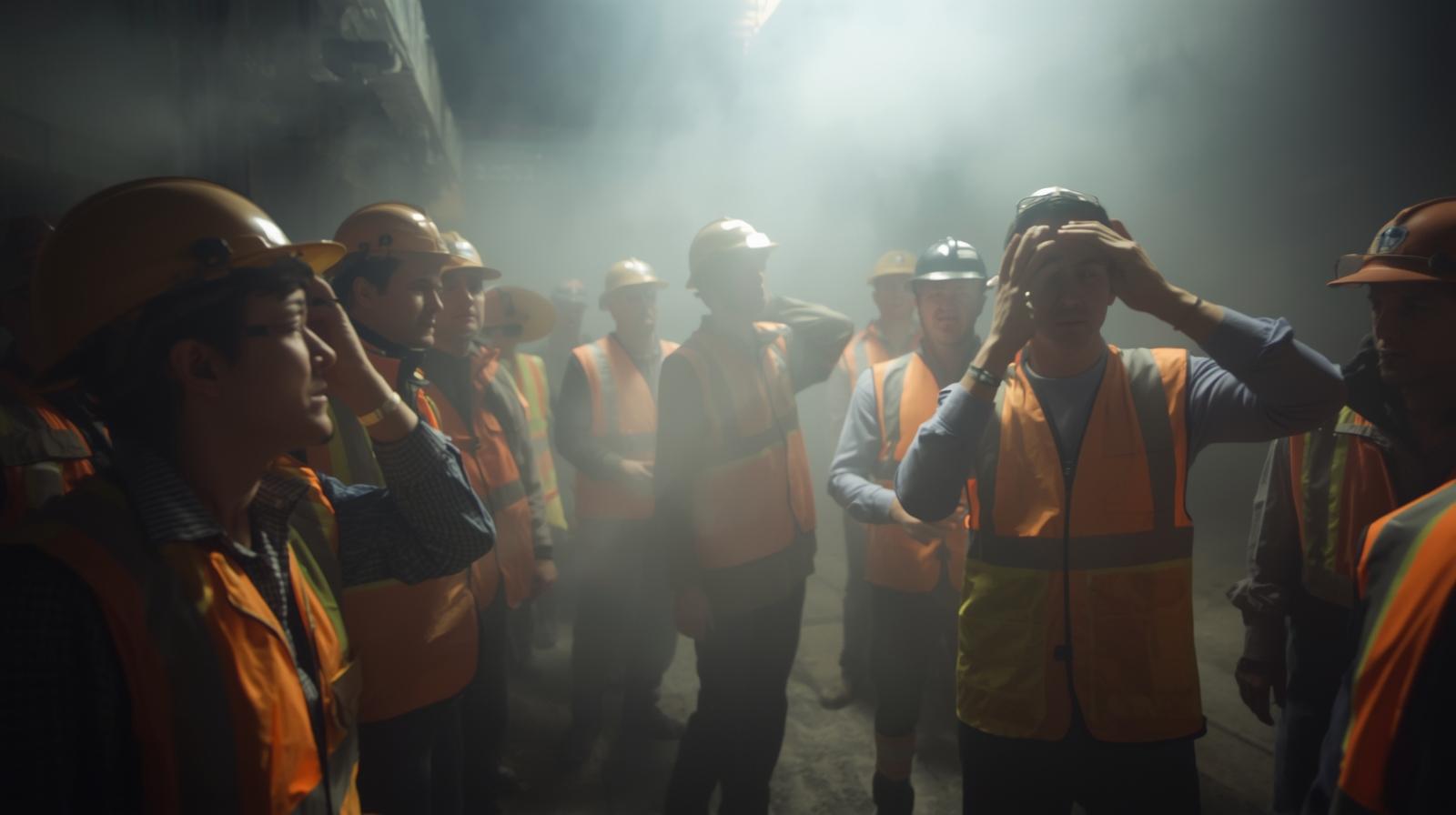
This illustration supports the blog “Melbourne Carbon Monoxide Leak: A Wake-Up Call for Workplace Risk Oversight.” It shows a manufacturing workplace where staff use gas detectors and wear respirators while monitoring a suspected carbon monoxide leak. A distressed worker depicts physical symptoms of exposure, while hazard icons and a smartphone warning represent risk identification, real-time alerts, and digital response. The visual reinforces the article’s key themes: that carbon monoxide is an invisible and odourless hazard, that inadequate ventilation and infrequent system testing can lead to critical incidents, and that organisations need proactive QHSE controls, trained staff, and modern monitoring technology to prevent workplace exposures. Suitable for posts focusing on risk management, industrial safety, occupational health, and gas detection compliance.
Recent Posts
- High-Risk Construction Work: When a SWMS Becomes Mandatory
- SWMS Basics: What They Really Are and Why Your Business Needs Them
- Craft a Strong QHSE Policy: Your Integrated Guide to Excellence
- Reality of SWMS in Modern Safety Management: Your Complete In-Depth Guide from MiSAFE
- Lead from the Front: Committing to IMS Success
Archives
- March 2026
- February 2026
- January 2026
- December 2025
- November 2025
- October 2025
- September 2025
- August 2025
- July 2025
- June 2025
- May 2025
- April 2025
- March 2025
- February 2025
- January 2025
- December 2024
- November 2024
- October 2024
- September 2024
- August 2024
- July 2024
- June 2024
- May 2024
- April 2024
- March 2024
- January 2023
- March 2020
- January 2020
- August 2019
- December 2018
- October 2018
- September 2018
- February 2018
- November 2017
- May 2017
- April 2017
- November 2016
- September 2016
- May 2016
- January 2016
- June 2015
- January 2015
Categories
- Advanced Analytics (Prescriptive Risk Management)
- AI & Machine Learning in Safety (Predictive Analytics)
- Auditing, Performance Evaluation & Improvement
- Case Studies
- Construction Safety
- Emerging Trends & Technology in QHSE
- Enterprise Risk Management Framework (ISO 31000)
- Hazard Identification & Risk Assessment
- Incident Investigation & Root Cause Analysis
- Industry-Specific Safety & Environmental Topics
- Injury & Illness Management
- Integrated Management Systems (Annex SL Alignment)
- Integrated QHSE (Quality, Health, Safety, Environment)
- Leadership Training & Development
- Leadership, Governance & Compliance
- Lessons Learned & Incident Reviews
- Management of Workers Compensation Claims
- Mining & Quarrying Safety
- Occupational Health & Safety (OHS) Management (ISO 45001)
- Project Risk Management
- Quality Management System (QMS)
- Quality/Health/Safety/Environmental Policies (Integrated QHSE Policy)
- Risk Communication & Stakeholder Engagement
- Risk Identification & Analysis
- Risk Management & Business Continuity (ISO 31000 / ISO 22301)
- Risk Treatment & Control Measures
- Software & Mobile Solutions (QHSE Platforms)
- Training, Competence & Culture
- Uncategorised

Recent Comments