Introduction
Picture this: Your team is about to start a job that could turn deadly in seconds — working at heights, near live electricity, or with hazardous materials. Do you know exactly when that situation demands a SWMS, or are you rolling the dice on compliance?
Welcome to Week 2 of SWMS Mastery: 52 Weeks with MiSAFE. This week we explore high-risk construction work — what qualifies, why it matters, and when a SWMS becomes not just recommended, but legally mandatory under Australian law.
What Is High-Risk Construction Work?
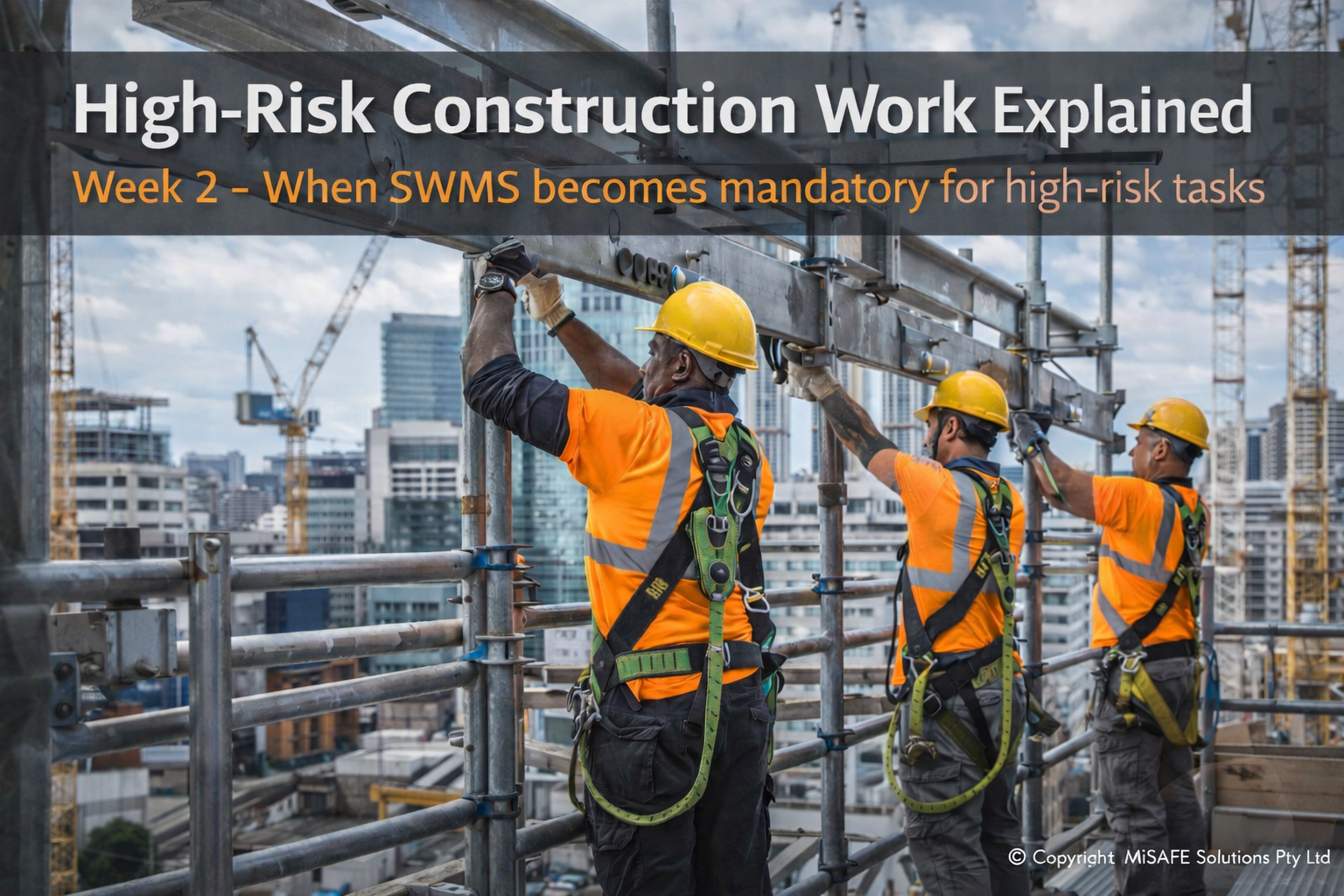
High-risk construction work is defined in Australian WHS regulations as any activity with a significant potential for serious harm. It includes 19 specific categories, such as work at heights over 2 metres, demolition, asbestos handling, confined spaces, and electrical work near live parts.
The key? If it involves a risk of falling, drowning, explosion, or exposure to dangerous substances, it is likely high-risk. Ignoring this could mean fines up to $3.6 million for corporations or jail time for officers.
For the full list, see Safe Work Australia’s model code: https://www.safeworkaustralia.gov.au/system/files/documents/1705/model-cop-construction-work_0.pdf
Why Identifying High-Risk Work Triggers SWMS Requirements
In 2026, regulators like Safe Work NSW and WorkSafe Victoria are cracking down harder than ever. Knowing when high-risk construction work kicks in is crucial because that is when SWMS become mandatory — no ifs or buts.
It is not about the industry; it is about the task. A “low-risk” site can suddenly require SWMS if one activity qualifies. Getting this wrong? Think investigations, stop-work orders, and reputational damage that lasts years.
The 19 Categories of High-Risk Construction Work
Australian law lists these as high-risk (Reg 291):
- Risk of falling more than 2m
- Demolition of load-bearing structures
- Asbestos disturbance
- Structural alterations needing temporary support
- Confined spaces
- Excavation deeper than 1.5m
- Tunnels
- Use of explosives
- Pressurised gas distribution mains or piping
- Chemical, fuel or refrigerant lines
- Electrical work on energised installations
- Tilt-up precast concrete
- Near water or traffic risking drowning or collision
- Diving work
- Artificial extremes of temperature
- Slip or fall on hazardous surfaces
- Powered mobile plant
- Work near cranes or hoists
- Materials falling from height
Any of these on your site? SWMS mandatory.
When SWMS Becomes Mandatory – The Triggers
SWMS is required before high-risk construction work begins. Triggers include:
- Starting any of the 19 categories
- Site changes increasing risk (e.g., weather, new hazards)
- After incidents or near-misses
- Worker consultation highlighting gaps
Pro tip: Even for non-high-risk work, a SWMS can still be a smart voluntary tool for due diligence.
Common Mistakes in Identifying High-Risk Work
Mistake 1: Assuming “it is not high-risk because we do it every day.” Reality: Familiarity breeds complacency — falls from 2m+ are high-risk regardless.
Mistake 2: Relying on outdated assessments. Reality: Sites evolve; reassess regularly.
Mistake 3: Forgetting subcontractors. Reality: As PCBU, you are responsible for everyone’s SWMS.
Practical Steps to Determine If SWMS Is Mandatory
- Review your job scope against the 19 categories.
- Conduct a risk assessment with your team.
- Check jurisdiction-specific rules (e.g., Victoria’s OHS vs harmonised WHS).
- Document why (or why not) SWMS is needed.
- If in doubt, create one — better safe than sorry.
These steps can form your own high-risk checklist.
What Comes Next in the Series
Next week: The evolution of SWMS requirements — from past to present lessons.
Discover MiSAFE SWMS Today
Register for MiSAFE SWMS here: https://swms.misafesolutions.com.au/register Find out more about MiSAFE SWMS here: https://misafesolutions.com.au/swms2 Contact MiSAFE Solutions Pty Ltd at contact@misafesolutions.com.au or call 07 5641 2101, or fill in our contact form: https://misafesolutions.com.au/contact-misafe-risk-management-software/
This article is general guidance. Check the legislation that applies in your state, or talk to us about your situation.