Introduction
Most SWMS look compliant on paper — but fail the moment a regulator or auditor opens them.
The reason? They miss the exact mandatory content required under Australian WHS law.
Welcome to Week 6 of SWMS Mastery: 52 Weeks with MiSAFE. This week we break down precisely what must be in every compliant SWMS so you can stop guessing and start building documents that actually protect your people and your business.
What the Law Actually Requires (Regulation 299)
Under the model WHS Regulations, a SWMS for high-risk construction work must contain specific information. Missing even one element can render the entire document non-compliant.
The mandatory content includes:
- A clear description of the high-risk construction work to be carried out
- The hazards and risks associated with that work
- The control measures that will be implemented to eliminate or minimise those risks
- How the control measures will be implemented, monitored and reviewed
- The names of the persons responsible for ensuring the controls are followed
This is not optional — it is the legal minimum.
Step-by-Step: How to Build a Compliant SWMS
Follow this exact process every time:
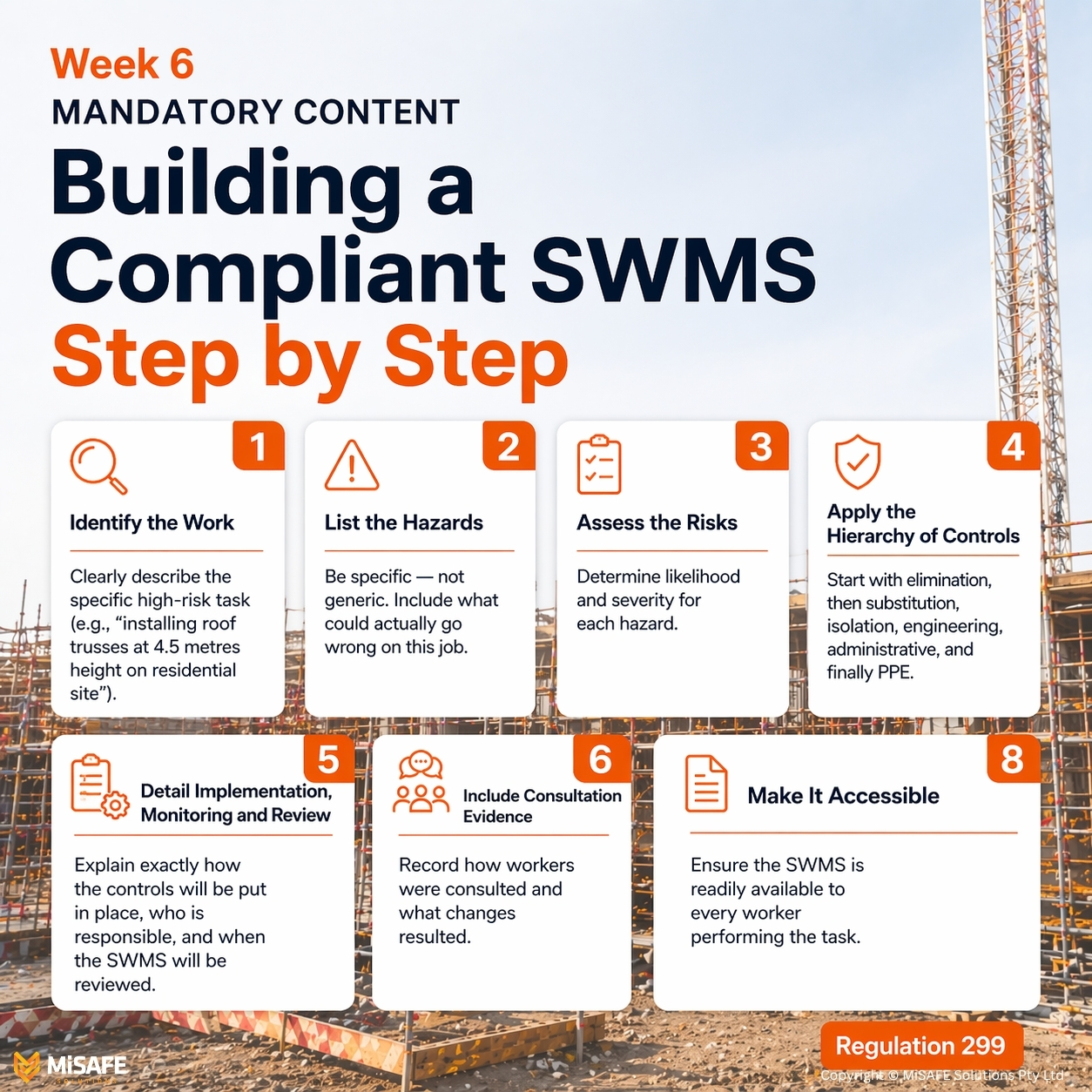
- Identify the Work Clearly describe the specific high-risk task (e.g., “installing roof trusses at 4.5 metres height on residential site”).
- List the Hazards Be specific — not generic. Include what could actually go wrong on this job.
- Assess the Risks Determine likelihood and severity for each hazard.
- Apply the Hierarchy of Controls Start with elimination, then substitution, isolation, engineering, administrative, and finally PPE.
- Detail Implementation, Monitoring and Review Explain exactly how the controls will be put in place, who is responsible, and when the SWMS will be reviewed.
- Include Consultation Evidence Record how workers were consulted and what changes resulted.
- Make It Accessible Ensure the SWMS is readily available to every worker performing the task.
Common Mistakes That Make SWMS Non-Compliant
- Using generic templates that don’t match the actual job
- Listing controls without explaining how they will be implemented
- Missing names of responsible persons
- Failing to include review triggers
- Poor or missing worker consultation records
These mistakes are the fastest way to fail an audit or investigation.
Practical Tips for Building Strong SWMS Content
- Involve the workers who will actually do the job
- Keep language simple and site-specific
- Use photos, diagrams or sketches where they help
- Review and update the SWMS before every new job or significant change
- Test it on site — if workers can’t understand or follow it, rewrite it
What Comes Next in the Series
Next week we look at worker consultation — making it genuine and effective rather than a box-tick exercise.
Discover MiSAFE SWMS Today
Register for MiSAFE SWMS here: https://swms.misafesolutions.com.au/register Find out more about MiSAFE SWMS here: https://misafesolutions.com.au/swms2 Contact MiSAFE Solutions Pty Ltd at contact@misafesolutions.com.au or call 07 5641 2101, or fill in our contact form: https://misafesolutions.com.au/contact-misafe-risk-management-software/
This article is general guidance. Check the legislation that applies in your state, or talk to us about your situation.