In today’s business environment, quality, health, safety, and environment (QHSE) management is no longer about paper checklists and manual processes. With evolving regulations, higher compliance expectations, and increasingly complex operational risks, organisations need smarter systems to manage safety effectively.
Technology now plays a central role in modern QHSE management. It helps businesses improve visibility, strengthen compliance, reduce administrative burden, and support a proactive safety culture.
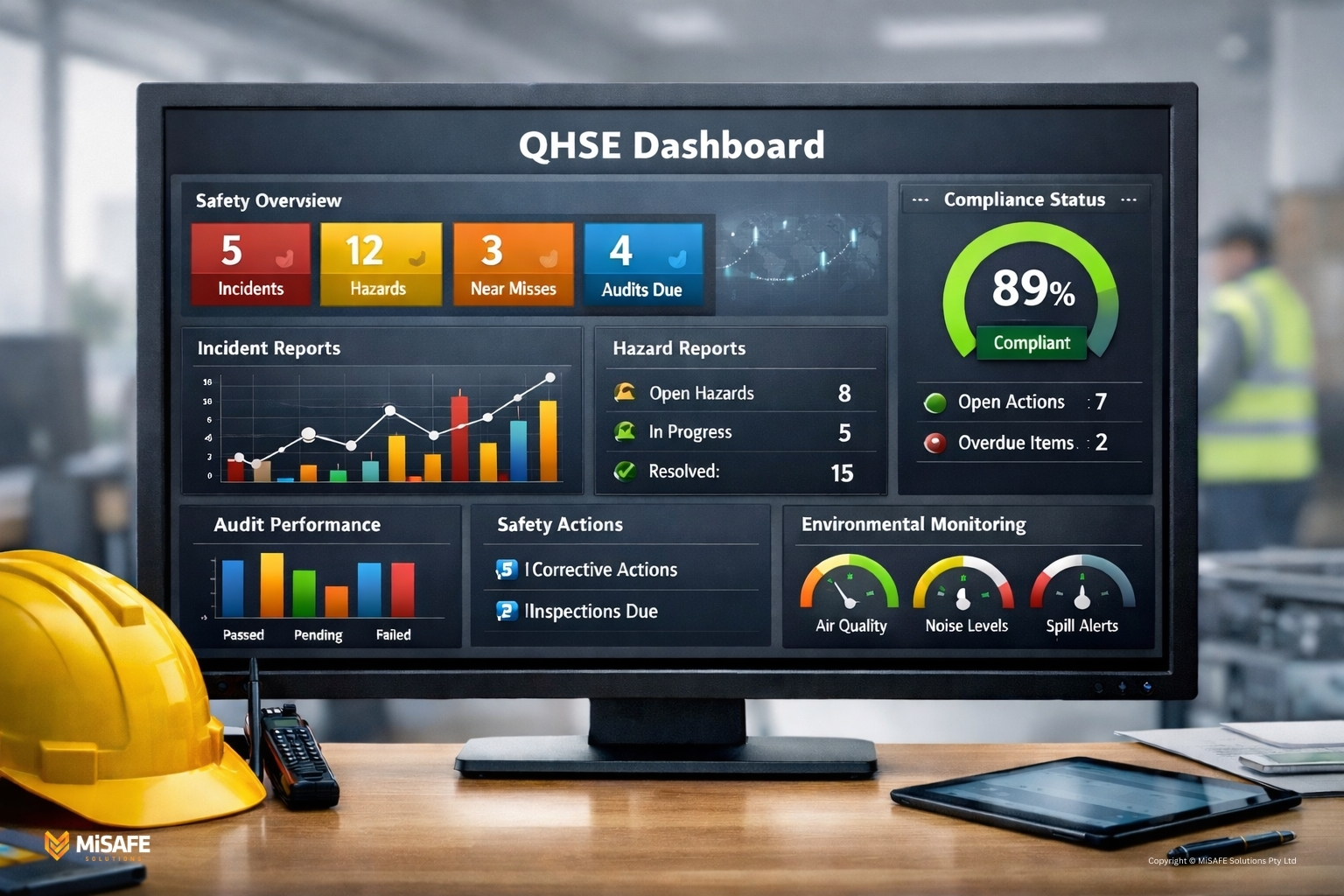
Modern QHSE technology dashboard providing real-time visibility into safety metrics, incidents, and compliance status
Why Traditional QHSE Methods Are No Longer Enough
Many organisations still rely on spreadsheets, printed forms, and manual reporting to manage safety and compliance. While these methods may work at a basic level, they quickly become inefficient as operations grow.
Challenges often arise when multiple sites are involved, teams are working remotely, or regulatory requirements change. Manual systems can lead to delayed reporting, duplicated effort, limited visibility of risks, and inconsistent data, all of which weaken overall QHSE performance.
Real-Time Data Drives Better Decision-Making
One of the biggest advantages of modern QHSE technology is access to real-time data. Instead of waiting for reports or scheduled reviews, organisations can monitor incidents, hazards, audits, and corrective actions as they happen.
This immediate insight allows leaders to identify trends early, address risks before they escalate, and make informed decisions based on accurate data. Real-time reporting also improves accountability and helps ensure actions are followed through.
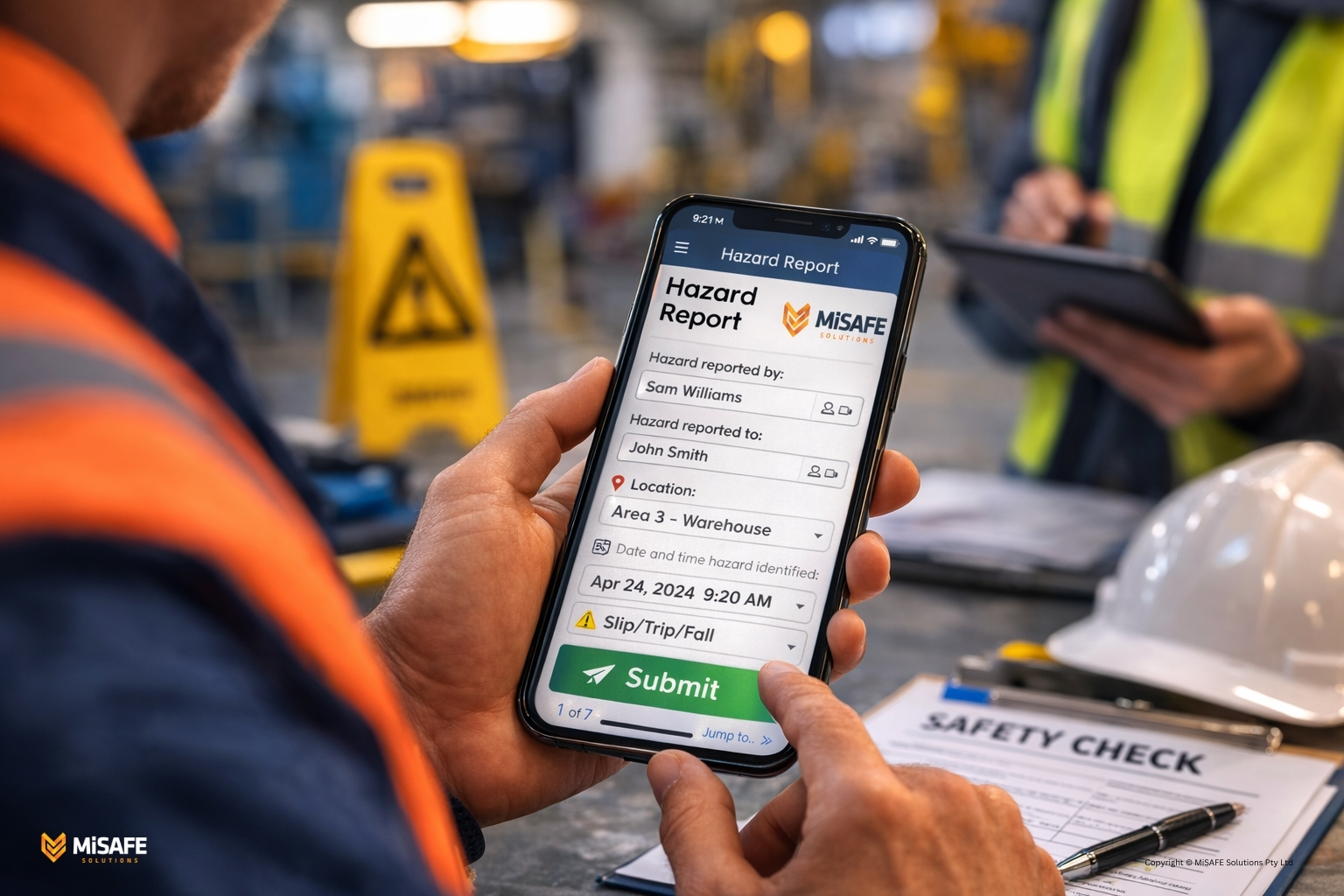
Frontline workers submitting hazard reports instantly via mobile devices using modern QHSE technology
Improved Efficiency Through System Integration
Modern QHSE platforms bring multiple safety functions into a single, integrated system. Incident reporting, risk assessments, audits, document control, and compliance tracking can all be managed in one place.
This integration improves communication between teams and reduces the risk of information loss or oversight. Workers in the field can submit reports easily, while managers gain a clear overview of safety performance across the organisation.
Customisation To Suit Different Industries And Operations
No two organisations face the same risks. Modern QHSE systems offer customisable workflows, forms, and dashboards tailored to specific industries and operational needs.
This flexibility ensures the system supports existing processes rather than forcing businesses to adapt to rigid software structures. As a result, teams are more likely to engage with the system and use it consistently.
Strengthening Compliance And Audit Readiness
Maintaining compliance can be challenging without the right tools in place. Technology simplifies this by centralising documentation, tracking corrective actions, and maintaining clear audit trails.
Automated reminders and version control help ensure policies and procedures remain up to date. When audits occur, required information is readily available, reducing stress and saving time. For more on compliance standards, visit the ISO website or Safe Work Australia.
Summary
Technology does not replace strong safety leadership. Instead, it enhances it by providing better visibility, clearer insights, and more efficient processes. A modern QHSE system supports informed decision-making, strengthens compliance, and helps build a proactive safety culture.
For organisations looking to improve how they manage quality, health, safety, and environmental responsibilities, embracing the right technology is a practical and forward-thinking step. Looking to modernise your QHSE processes? Speak with MiSafe Solutions to explore smarter, technology-driven safety management. Contact us today via email contact@misafesolutions.com.au or call us on 07 5641 2101.
Recent Comments