
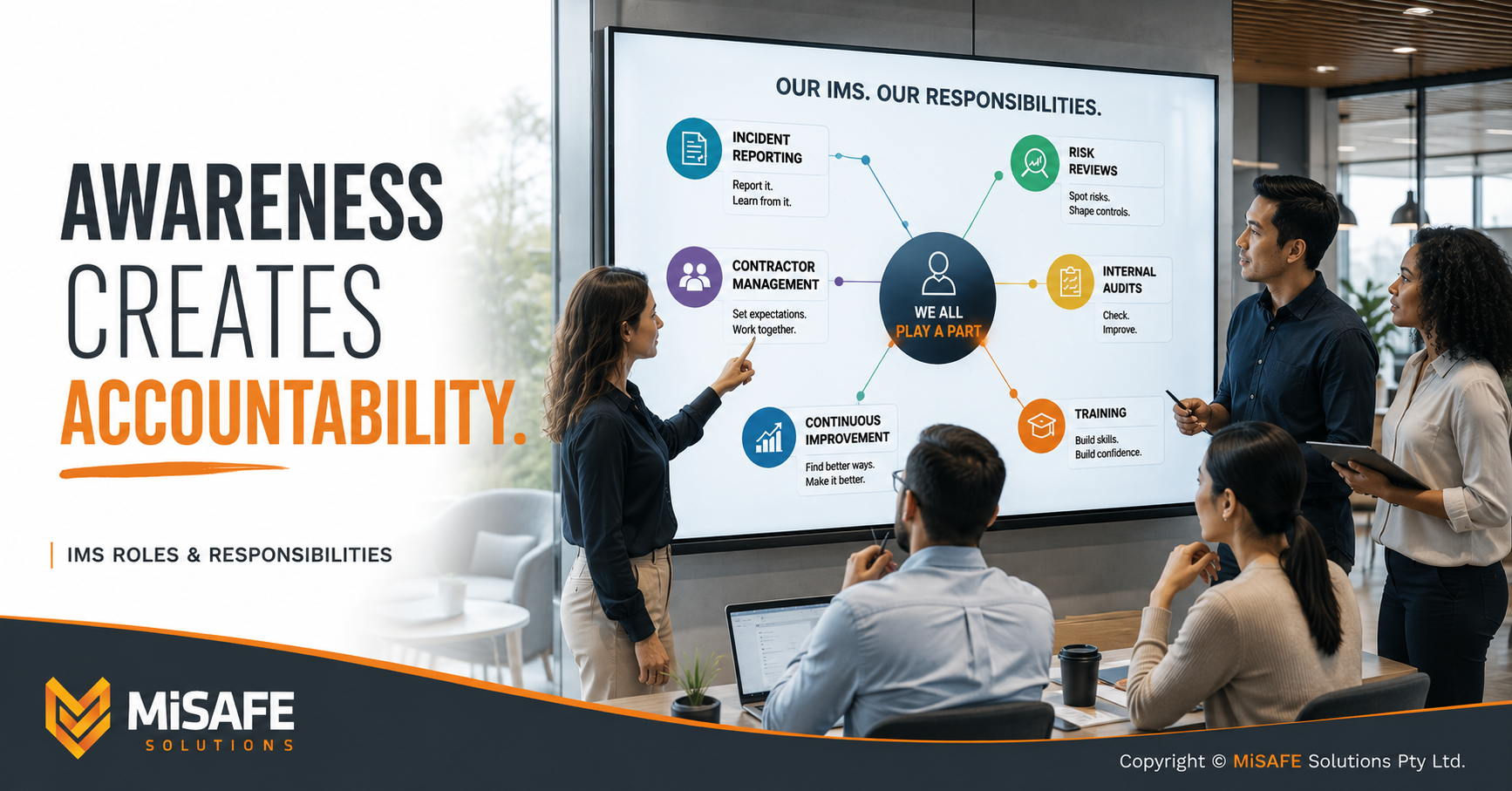
A management system that lives in a folder protects no one. QHSE awareness moves it off the shelf. It puts the system into the daily decisions of the people doing the work. Yet most businesses skip this step. They sign the policies, write the procedures, and then leave the team to learn their roles by osmosis.
Awareness is not a poster on the wall. It is not a sign on sheet from an induction two years ago. However, ISO treats it as a specific requirement. The Work Health and Safety Act backs it with a duty. When a worker can tell you what the system expects of them, the system is real. When they cannot, it is decoration.
What ISO and the WHS Act require on awareness
Clause 7.3 Awareness sits in ISO 9001, ISO 14001 and ISO 45001. Workers must know the policy. They must understand how they help the system work, and why that matters. In addition, they must know what happens if they ignore it. ISO 45001 goes further. For example, workers must know the incidents and findings that affect them. They must grasp the hazards of their own work. Finally, they must know they can step away from immediate danger.
Clause 7.4 Communication adds the next layer. The organisation decides what to share, when, with whom and how. Section 19 of the WHS Act makes information and instruction a duty. Sections 47 to 49 then require real consultation, not one way messages. So awareness is the bridge between a documented system and a duty you have actually met.
QHSE awareness starts with clear roles
You cannot raise QHSE awareness of a role nobody has defined. So define it first. Make each person’s IMS duties explicit. Spell out what they own, what they support, what they must report and who they answer to. A roles and responsibilities matrix does exactly this. It maps every IMS activity to the role that carries it. Then it tags each one as responsible, accountable, consulted or informed.
Once the roles are clear, the message gets specific. A worker no longer hears that everyone should work safely. Instead, they learn the three things their role needs from them. That is far easier to remember, and to act on.
Make awareness an ongoing campaign
One induction does not create lasting awareness. People forget. Roles change. New starters arrive. Lessons from incidents fade. So treat QHSE awareness as a rolling campaign with a simple rhythm. Cover the policy and roles at induction. Reinforce one theme each month at toolbox talks. Brief every incident outcome to the people it affects. Refresh the whole team when the system changes.
Next, vary the channel to match the message. Toolbox talks suit site themes. Short briefings handle procedure changes. The noticeboard carries the policy and objectives. For role specific duties, use one on one coaching. The point is simple. Repeat the message through different doors, so it lands.
Prove it landed
An auditor will not accept awareness you cannot evidence. More importantly, you cannot rely on it either. So capture the evidence as you go. Keep toolbox sign on sheets, induction records and signed position descriptions. Then add a short verbal check. Ask a worker to explain a key duty in their own words. This check is the strongest of all. It tests understanding, not attendance.
Record when each role was last briefed, and how. Build the picture role by role. Then you can show that every person knows their IMS duties, the policy and the risks that apply to them. That satisfies Clause 7.3. It also discharges a section 19 duty.
Practical Application
Picture an Australian civil contractor with 25 staff across several sites. Every new starter is inducted on the policy, the key risks and their role. They sign an acknowledgement of their position description. Each month the team runs one theme at the Tuesday and Friday toolboxes, and logs it. Manual handling one month, traffic management the next, environmental controls after that. Every incident outcome reaches the affected crew within a week.
The supervisor also runs quick verbal checks on site. When would you stop work? How do you report a hazard? By the end of the quarter, the contractor can show the result role by role. The team understands the system. They did not just attend a session. That evidence holds up at audit. The same habit shifts the culture, and it prevents incidents.
Conclusion
A management system only works when the people inside it know their part. So define the roles. Teach them plainly. Reinforce them on a rhythm. Then prove the message landed. Do that, and QHSE awareness stops being a poster. It becomes the thing that makes every other part of your system work.
The MiSAFE All-in-One QHSE subscription sets up your roles and responsibilities matrix and awareness campaign inside DS Site. It tracks toolbox sign on, incident briefings and acknowledgements automatically.
Ready to act? Contact us today or book a free 45-minute consultation.
Download the Free Template
Download the free QHSE Roles and Responsibilities Matrix (.xlsx) and give every person a clear, teachable picture of their IMS role.
This article is general guidance. Check the legislation that applies in your state, or talk to us about your situation.