Welcome to Week 8 of MiSAFE Solutions Pty Ltd’s IMS Mastery Series: “Build Your IMS Empire: 53 Weeks of QHSE Insights with MiSAFE”. Following last week’s stakeholder mapping, this week we move from identification to action — gathering meaningful input from those stakeholders to shape and strengthen your Integrated Management System (IMS).
Stakeholder input is not a nice-to-have; it is a core requirement of ISO Annex SL (Clause 4.2) and the foundation of a relevant, effective QHSE system.
Why Gathering Stakeholder Input Matters
Understanding what your stakeholders need and expect turns your IMS from a compliance document into a living system that actually works. When you ignore or assume their needs, you risk resistance, low adoption, overlooked hazards, or environmental complaints. In Australian organisations — especially SMEs in construction, manufacturing, and trades — early and ongoing input helps you meet legal obligations, reduce incidents, improve quality, and build stronger relationships with regulators, customers, and the community.
Key Sources of Stakeholder Input
Focus on these groups to gather balanced, actionable feedback:
- Internal Stakeholders — Workers, supervisors, contractors, and leadership
- External Stakeholders — Customers, suppliers, regulators, local communities, and insurers
Practical Methods to Gather Input
Use a mix of these proven techniques to collect meaningful data:
- Structured Surveys and Questionnaires — Quick, scalable, and anonymous. Ideal for large workforces.
- One-on-One Interviews — Deep insights from key individuals (e.g., site supervisors or long-term clients).
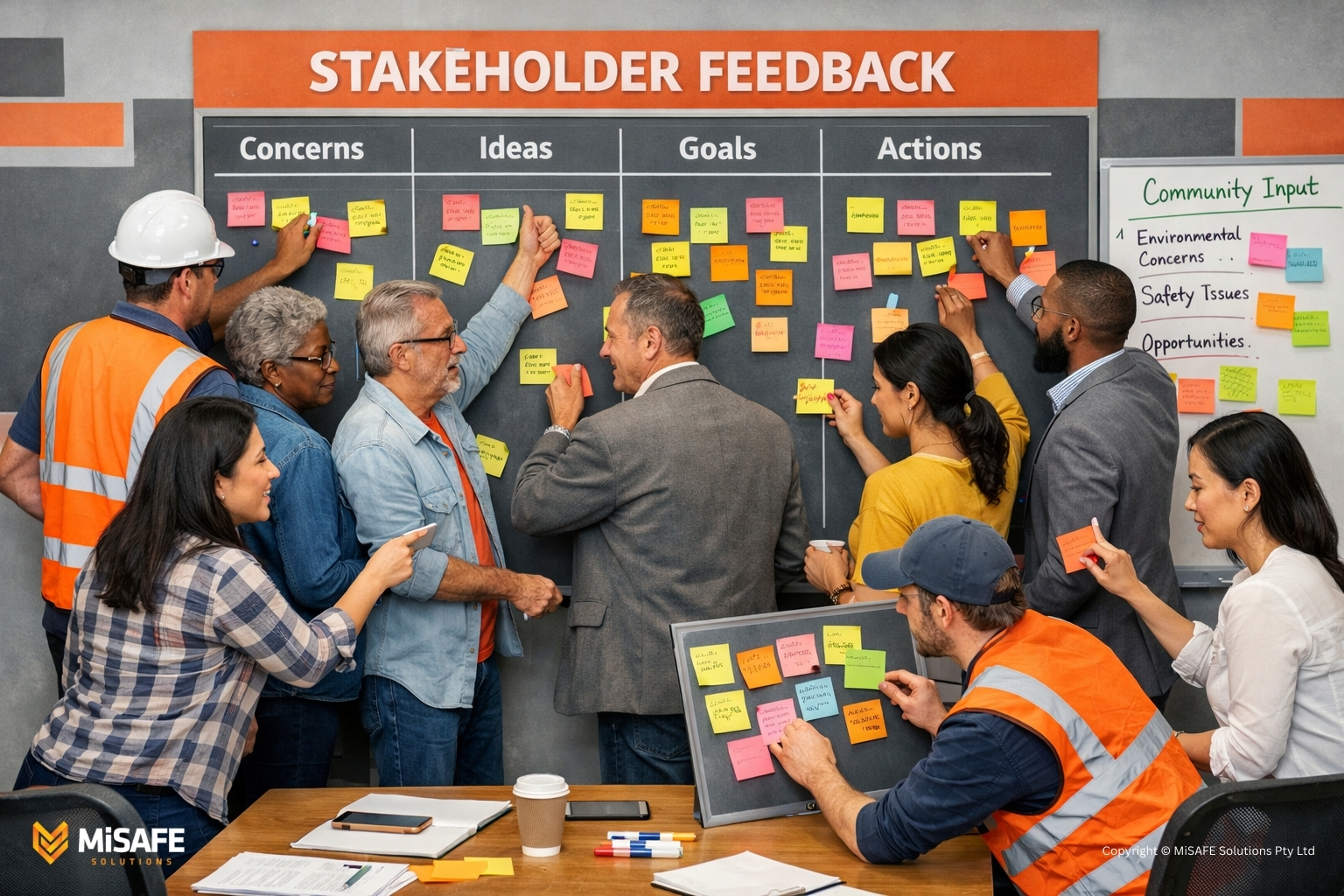
- Focus Groups and Workshops — Collaborative discussions that reveal shared concerns and ideas.
- Toolbox Talks and Safety Meetings — Regular, informal opportunities to capture frontline feedback.
- Management Review Meetings — Formal review of stakeholder input as required by all three ISO standards.
How to Analyse and Use the Input
Once collected, organise the feedback by theme (safety concerns, quality issues, environmental impacts, etc.). Then:
- Prioritise issues based on risk and frequency.
- Convert insights into actionable objectives and controls.
- Update your risk register, policies, and procedures accordingly.
- Communicate back to stakeholders what changes were made — this builds trust and encourages future participation.
Common Challenges and How to Overcome Them
- Low Response Rates — Make surveys short and relevant; offer incentives where appropriate.
- Biased or Superficial Feedback — Use anonymous channels and ask specific, open-ended questions.
- Overwhelming Volume — Categorise responses and focus first on high-impact items.
Benefits of Effective Stakeholder Input
When done well, this process leads to higher employee engagement, fewer incidents, stronger compliance, and a more resilient IMS. Organisations that actively listen to their stakeholders consistently outperform those that treat input as an afterthought.
Get Started with Your Free Tool
Download the Stakeholder Input Collection Template (Document ID: MISAFE-IMS-TMP-006-V1.0) to systematically gather, organise, and action stakeholder feedback.
Stay Tuned
Next week: “SWOT Analysis for QHSE: Weighing Strengths, Weaknesses, Opportunities and Threats”. Subscribe for updates.
Ready to act? Contact us today for expert support at https://misafesolutions.com.au/contact-us/ or book a free 1hr consultation meeting to discuss your IMS requirements with MiSAFE at https://calendly.com/misafe/1-hour-ims-development.
Recent Comments